


Field-Proven Army Rigging Guide - Signal Yellow
13 sold in last 24 hours
This field-proven Army rigging guide is a signal-yellow, shop-ready reprint of the 1968 TM 5-725 manual. It breaks down wire rope, chain, fiber rope, knots, hitches, splices, and safe-load calculations into clear, repeatable steps your crew can trust. The bold yellow cover stays visible on busy floors and in the field, making it the go-to standard when lifts get serious. At this price, equipping every workstation with a dedicated copy is an easy safety upgrade.
Field-Proven Army Rigging Guide That Just Works on the Job
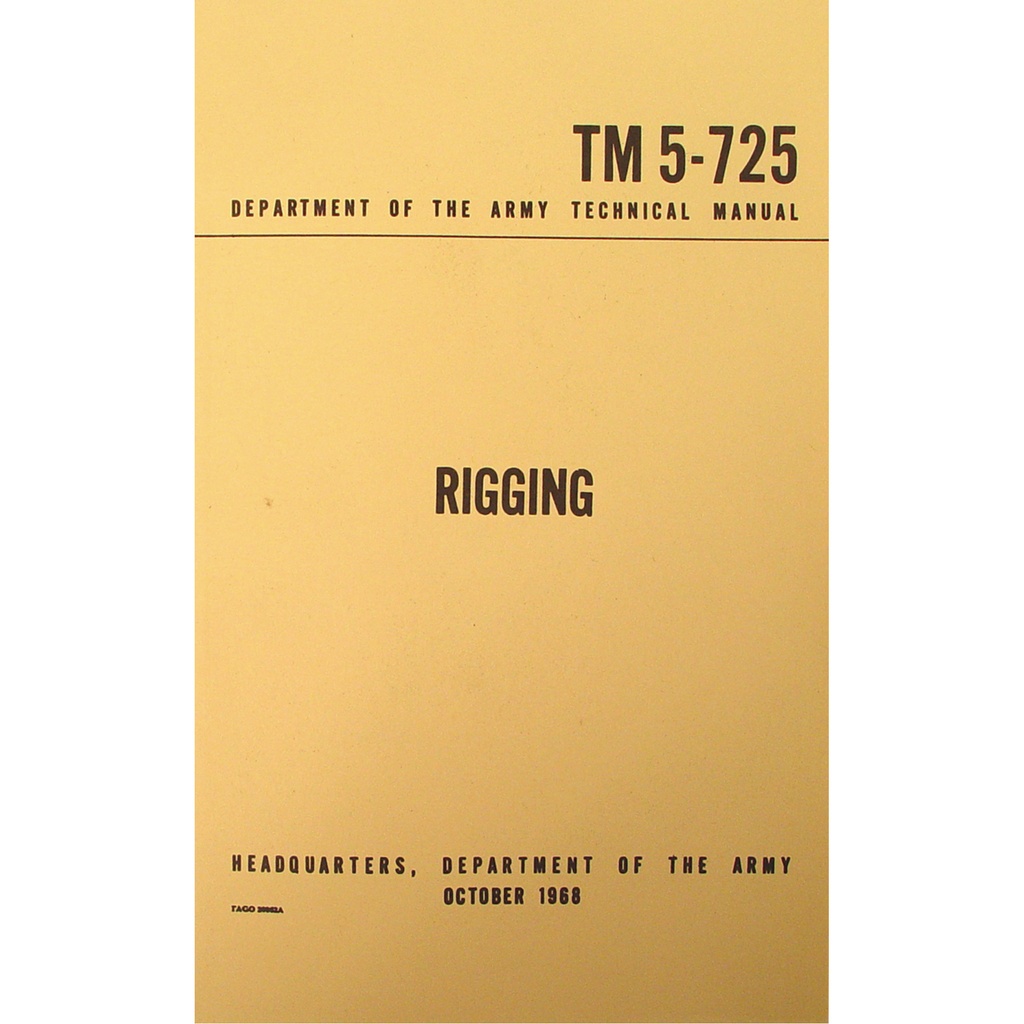
The Field-Proven Army Rigging Guide - Signal Yellow is a straight-to-the-point reprint of the October 1968 TM 5-725 Army technical manual. It’s the kind of rigging manual crews actually use—clear, durable, and easy to spot on any bench, cart, or jobsite.
If you’re buying this, you already know why a real rigging manual matters. You want one place your team can open for fast answers on wire rope, chains, fiber rope, knots, hitches, splices, and quick safe-load calculations—and then keep open as the standard everyone agrees on.
Why This Rigging Manual Becomes the Shop Standard
This isn’t a theory book. It’s a working rigging manual built from Army field requirements, then reprinted so modern shops and field crews can keep those standards within arm’s reach.
Every section is organized for real use: practical rigging setups, safe-load guidance, and procedures explained so a working crew can apply them under pressure. No fluff, no guesswork—just the information you need to confirm a lift is set up correctly before anyone leaves the ground.
High-Visibility Signal-Yellow Cover for Real-World Use
The signal-yellow softcover isn’t a design flourish; it’s a safety feature. On a crowded job cart or in a busy training room, this manual stands out immediately, which means it gets used instead of misplaced.
The bold black "RIGGING" title and TM 5-725 designation tell your team exactly what it is from across the room. When someone calls out, “Grab the rigging book,” there’s no confusion about which one they mean.
Organized the Way Crews Actually Work
Inside, the content follows the same disciplined structure it was issued with in 1968: step-by-step rigging practices, component definitions, inspection criteria, and calculation methods laid out so a working rigger can find what they need fast.
Wire rope, chains, fiber rope, knots, hitches, splices, and safe-load calculations are grouped logically so you’re not hunting through random chapters. That organization is exactly why this manual works equally well on shop floors, in training rooms, and out in the field.
Field-Proven Content: Why This 1968 Reprint Still Holds Up
Rigging fundamentals haven’t changed. Wire rope still behaves the way it did in 1968. Chains still fail the same way. The physics of the lift are the same, which is why this rigging manual remains a solid reference for crews who want consistent, standardized guidance.
The Department of the Army imprint and TM 5-725 designation signal a level of technical discipline many commercial manuals never match. It was written for crews who could not afford to guess—and that shows in the clarity of the procedures and calculations.
Clarity That Cuts Through Complexity
Safe-load calculations, rigging angles, and hardware selection can turn into confusion quickly if they’re not explained well. This guide turns that math into dependable, repeatable steps. Crews can walk through the logic, not just copy numbers from a chart.
For training, that means new riggers understand the "why," not just the "what." For experienced crews, it means a reliable reference to double-check assumptions before a critical lift.
Ideal for Shops, Training Programs, and Field Crews
Because this is a compact, softcover reprint, it fits how modern teams actually operate:
- Shop floors: Keep one on the bench or in the tool crib as the go-to standard.
- Training rooms: Issue copies to students or apprentices for classroom and hands-on work.
- Field crews: Toss it in a gang box or truck for quick checks on site.
At this price point, you can outfit multiple stations or teams with their own dedicated copy, reducing the "who has the book" bottleneck.
Value: A Low-Cost Upgrade to Your Rigging Program
For less than the cost of a single hardware mistake, this rigging manual gives your team a shared standard and a common language. That alone reduces friction between planners, supervisors, and hands-on riggers.
Because it’s a faithful reprint of a recognized Army technical manual, you get embedded credibility without paying for a high-end hardcover reference that never leaves the office shelf.
Why Crews Actually Use This Manual
Crews return to references that make their work easier, faster, and safer. This guide does exactly that:
- Direct, unembellished explanations that respect working time.
- Clear structure that makes key topics easy to locate.
- Signal-yellow cover that prevents it from disappearing under paperwork.
The result: a manual that doesn’t just sit on a shelf. It stays on carts, benches, and tables—open and in use.
What Buyers Ask Before Purchasing This OTF Knife
Is this OTF knife worth the price?
There is no OTF knife here—this listing is for a rigging manual, not a blade. The value comes from the Army technical content, the clear organization, and the high-visibility signal-yellow format that makes it a practical working reference. For a low cost, you get a field-proven standard you can hand directly to crews, students, or apprentices without worrying if it will be used or just filed away.
Is this OTF knife legal?
Because this product is a book—a reprint of the October 1968 Department of the Army TM 5-725 rigging manual—there are no knife mechanisms, no blades, and no legality concerns tied to weapons laws. It ships and stores like any other printed technical reference, making it suitable for companies, schools, and training programs with strict tool or weapon policies.
How fast does this ship?
This signal-yellow rigging manual is kept in stock as a standard reference item. That means your order can be processed quickly and shipped using our regular fulfillment schedule. You’re not waiting on a special run or a custom print—just a ready-to-ship, field-proven manual that can be on your shop floor or in your training room with minimal delay.
Ready to Standardize Your Rigging Reference
If you’re looking for a dependable, field-tested rigging manual that crews will actually use, this 1968 Army TM 5-725 reprint is an easy decision. The signal-yellow cover keeps it visible. The military technical structure keeps it clear. The low cost makes it practical to buy in multiples.
Add it to your training materials, your jobsite library, or your shop reference shelf and give your team one more way to make the safe choice the obvious choice.